The Microbiome and Liver Disease Progression
By Gut Flora Atlas Editorial team
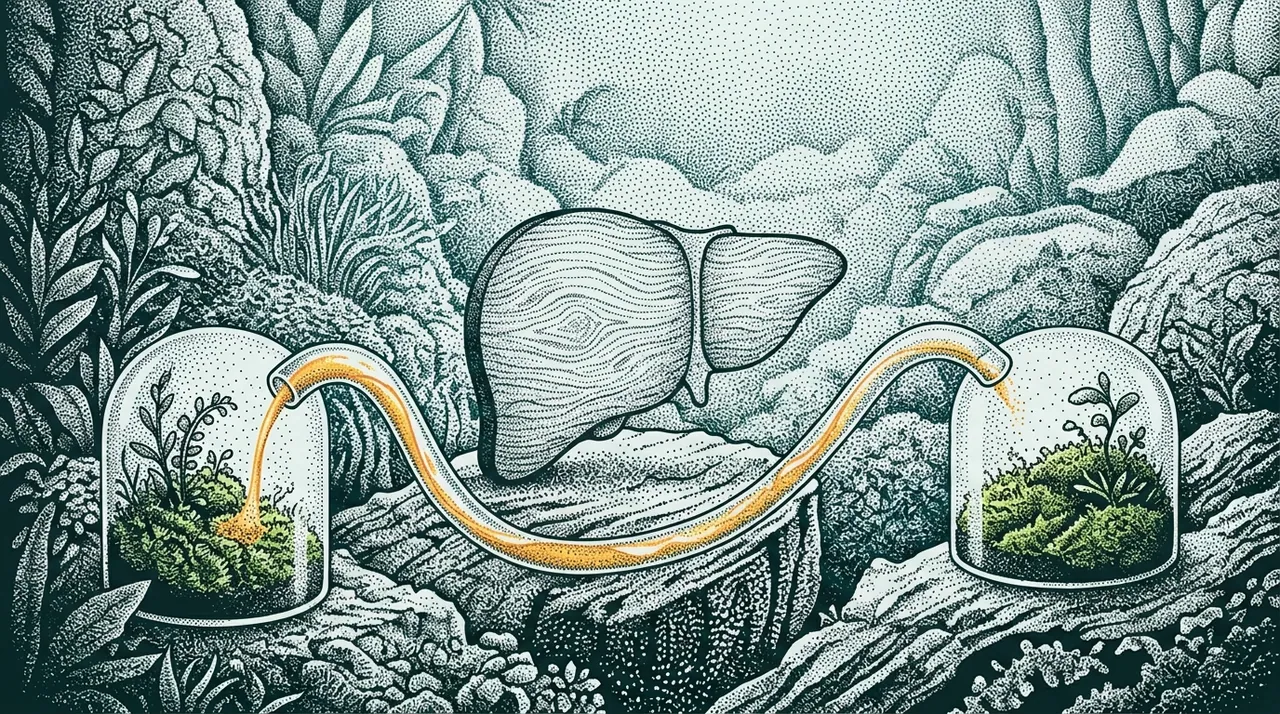
The liver and gut microbiome share a bidirectional relationship that profoundly influences hepatic health and disease outcomes. Recent microbiome research has revealed that dysbiosis, or imbalanced microbial communities, plays a significant role in the development and progression of various liver diseases, including fatty liver disease, cirrhosis, and hepatic encephalopathy. Understanding this gut-liver axis has opened new perspectives on how microbial composition and function contribute to liver pathology and potential therapeutic interventions.
The Gut-Liver Axis and Dysbiosis
The gut microbiome maintains constant communication with the liver through multiple pathways, including the portal circulation, immune system signaling, and microbial metabolite production. In healthy individuals, the intestinal epithelial barrier maintains selective permeability, allowing beneficial microbial products to reach the liver while preventing harmful bacterial translocation. However, dysbiosis disrupts this delicate balance, leading to increased intestinal permeability and bacterial lipopolysaccharide (LPS) translocation into the bloodstream.
Dysbiotic microbiota patterns are frequently observed in patients with non-alcoholic fatty liver disease (NAFLD), alcoholic liver disease (ALD), and viral hepatitis. These altered communities typically show reduced microbial diversity and decreased abundance of beneficial taxa such as Faecalibacterium prausnitzii and other short-chain fatty acid (SCFA) producers. The loss of these protective bacteria compromises intestinal barrier function and reduces the production of butyrate and other metabolites essential for hepatic homeostasis. The microbial metabolic potential and functional capacity of dysbiotic communities is substantially diminished, limiting their ability to produce protective compounds that support liver function.
Microbial Metabolites and Hepatic Inflammation
Microbial fermentation of dietary fiber produces short-chain fatty acids, particularly butyrate, which serve as primary energy sources for colonocytes and regulate immune tolerance in the gut. These metabolites strengthen the intestinal barrier and modulate systemic inflammation. In liver disease, reduced SCFA-producing capacity correlates with disease severity and progression. The microbial fermentation of resistant starch represents a key mechanism through which dietary interventions may influence liver health outcomes.
Beyond SCFA production, the microbiota synthesizes secondary bile acids through deconjugation of primary bile acids. These metabolites regulate farnesoid X receptor (FXR) and G-protein coupled bile acid receptor 1 (TGR5) signaling pathways, which control inflammation, glucose metabolism, and lipid homeostasis. Dysbiotic communities show impaired bile acid metabolism, reducing signaling through these protective pathways and contributing to hepatic steatosis and inflammation.
Dysbiotic microbiota also produce elevated levels of lipopolysaccharide and other pathogen-associated molecular patterns (PAMPs), which activate toll-like receptors (TLRs) on hepatic immune cells. This chronic immune activation promotes Kupffer cell-mediated inflammation and hepatic stellate cell activation, driving fibrosis progression. Additionally, dysbiosis-associated alterations in tryptophan metabolism reduce production of aryl hydrocarbon receptor (AhR) ligands, compromising intestinal barrier integrity and immune regulation. The mechanisms underlying dysbiosis-associated disease progression share conceptual similarities with processes observed in the microbiome in chronic kidney disease, where microbial dysbiosis and uremic toxin accumulation similarly drive organ-specific pathology.
Microbiota Composition and Disease Severity
Research has identified specific microbial compositional patterns associated with liver disease severity. Patients with cirrhosis and hepatic encephalopathy demonstrate marked dysbiosis characterized by reduced bacterial diversity and increased abundance of potentially pathogenic Proteobacteria and Firmicutes. Certain bacterial taxa, including Enterobacteriaceae and Streptococcus species, are enriched in advanced liver disease and associated with increased systemic endotoxemia and cognitive dysfunction.
Conversely, protective microbial taxa maintain barrier function and metabolic capacity. Increased abundance of Bacteroides fragilis, Faecalibacterium prausnitzii, and Akkermansia muciniphila is associated with better clinical outcomes and reduced inflammatory markers. These organisms produce SCFA, maintain mucus layer integrity, and promote regulatory T cell differentiation. Understanding microbial cross-feeding and syntrophic relationships within these communities reveals how specific bacterial interactions support protective metabolic functions.
Therapeutic modulation of microbiota composition through prebiotics, probiotics, and dietary interventions represents an emerging strategy for managing liver disease progression. Interventions targeting restoration of SCFA-producing capacity and reduction of pathogenic bacterial translocation show promise in preclinical and early clinical studies, though further investigation is needed to establish efficacy and optimal implementation strategies.
Scientific Background
The gut-liver axis operates through multiple interconnected mechanisms. The portal circulation directly delivers microbial metabolites and bacterial antigens to hepatic tissue, while intestinal dysbiosis increases bacterial translocation and systemic lipopolysaccharide levels. Dysbiosis-associated reduction in butyrate and secondary bile acid production impairs FXR/TGR5 signaling, promoting hepatic lipid accumulation and inflammatory responses. Simultaneously, dysbiotic communities generate increased levels of endotoxins and uremic toxins that activate pattern recognition receptors on hepatic immune cells. These pathways collectively drive progression from simple steatosis to steatohepatitis, fibrosis, and cirrhosis. Microbiota-targeted therapeutics aim to restore microbial diversity, enhance SCFA production, and reduce pathogenic bacterial translocation to interrupt disease progression mechanisms.
Conclusion
The microbiome plays a central role in liver disease pathogenesis and progression through multiple interconnected mechanisms involving barrier function, metabolite production, and immune regulation. Dysbiotic microbiota communities characterized by reduced diversity and altered metabolic capacity contribute to hepatic inflammation, steatosis, and fibrosis progression. Emerging evidence supports microbiota-targeted interventions as potential therapeutic strategies, though further research is required to translate these findings into clinical practice. Future investigations should focus on identifying specific microbial signatures predictive of disease progression and developing personalized microbiota-modulating therapies tailored to individual dysbiosis patterns.
This article is for general information and does not replace professional advice, diagnosis or treatment.