Viruses and Bacteriophages in Gut Microbiota
By Gut Flora Atlas Editorial team
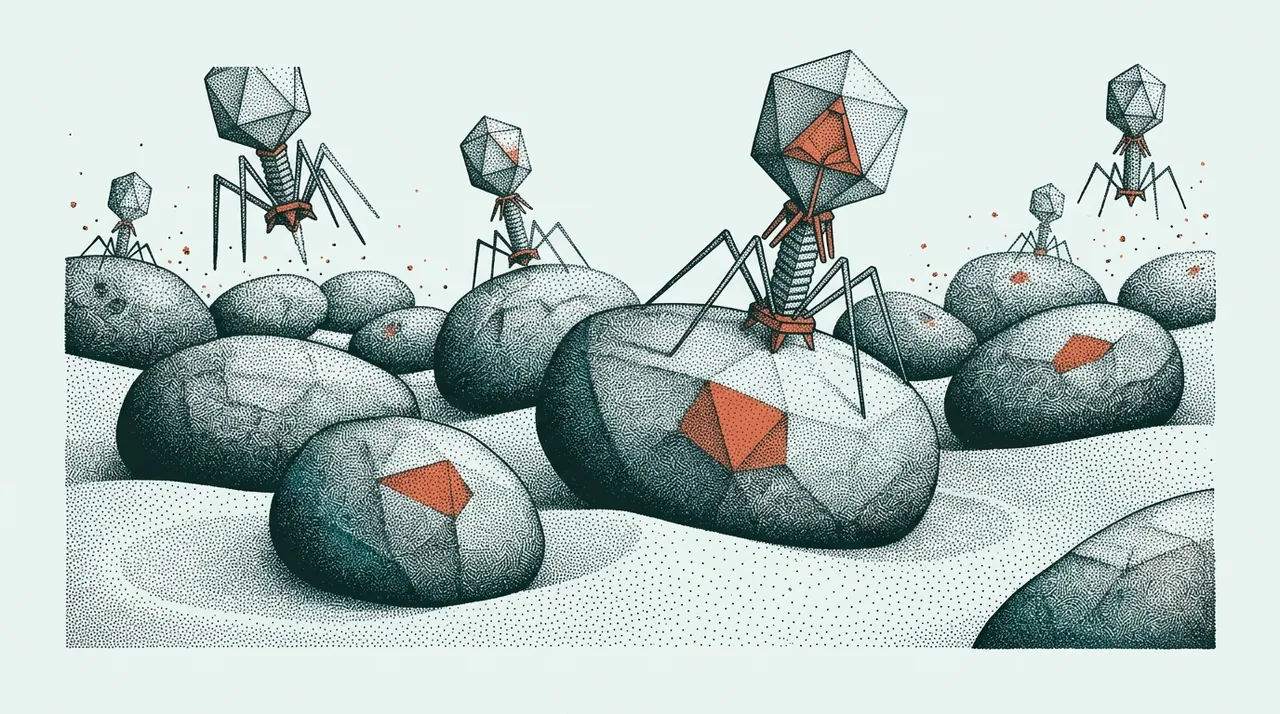
The human gut microbiota has long been understood as a complex ecosystem dominated by bacterial and archaeal communities. However, contemporary microbiome research increasingly recognizes that viruses, particularly bacteriophages, constitute a significant and functionally important component of this microbial landscape. Bacteriophages, which are viruses that specifically infect bacteria, represent a largely understudied yet abundant fraction of the gut virome. Recent investigations suggest that these viral agents play crucial roles in shaping microbial community structure, modulating bacterial populations, and influencing the overall functional capacity of the gut ecosystem. Understanding the dynamics of viruses and bacteriophages in gut microbiota is essential for comprehensive microbiome characterization and may have implications for various aspects of gastrointestinal health and disease.
Scientific Background
The virome, defined as the collective genetic material of all viruses within a given environment, represents a distinct component of the gut microbiota that differs fundamentally from bacterial communities. Bacteriophages are the dominant viral entities in the human gut, vastly outnumbering bacterial cells in many cases, with estimates suggesting a ratio of approximately 1 phage to 10 bacteria. These viruses possess remarkable genetic diversity and can be classified into numerous families based on morphology, genome type, and replication strategy. The majority of characterized gut bacteriophages are double-stranded DNA phages, though single-stranded DNA and RNA phages also inhabit the intestinal environment. The virome exhibits significant interpersonal variation, with individual composition patterns influenced by diet, age, antibiotic exposure, and disease status. Advanced sequencing technologies have enabled researchers to profile viral communities with increasing precision, revealing that the gut virome is substantially more diverse than previously appreciated. Unlike bacterial microbiota, which can be characterized through 16S ribosomal RNA gene sequencing, virome analysis typically requires metagenomic approaches due to the lack of universal viral genetic markers. This methodological distinction has historically limited our understanding of viral contributions to microbiota function.
Bacteriophage Functions and Ecological Roles
Bacteriophages exert multiple ecological functions within the gut microbiota, functioning as predatory agents that regulate bacterial population dynamics through lysis-mediated cell death. This predatory activity influences community composition and prevents any single bacterial species from achieving dominance. Beyond population control, bacteriophages participate in horizontal gene transfer, facilitating the movement of genetic material between bacterial cells, including genes encoding virulence factors, antibiotic resistance determinants, and metabolic capabilities. This genetic exchange represents a significant evolutionary mechanism shaping bacterial adaptation and functional capacity. Temperate bacteriophages, which integrate into bacterial chromosomes as prophages, can substantially alter host phenotypes through the expression of phage-encoded genes. Such lysogenic conversion may enhance bacterial fitness or modify their metabolic properties in ways that influence overall community function. The relationship between bacteriophages and specific bacterial populations remains incompletely understood, though emerging evidence suggests that certain phages preferentially target particular taxa. For instance, research examining Akkermansia muciniphila: Functions and Health Significance has revealed that this mucin-degrading bacterium maintains its own characteristic phage predators, indicating that host-phage relationships are highly specific. Additionally, bacteriophage activity may influence the efficacy of butyrate-producing bacteria and intestinal barrier function, since these metabolically important organisms are subject to phage predation.
Virome Composition and Disease Association
Emerging research indicates that virome composition exhibits distinct patterns associated with various physiological states and disease conditions. Studies examining individuals with inflammatory bowel disease and dysbiotic patterns have documented alterations in both bacteriophage diversity and abundance relative to healthy controls, suggesting that viral dysbiosis may contribute to or reflect disease pathology. The stability and resilience of the virome during environmental perturbations, such as antibiotic treatment or dietary changes, remain active areas of investigation. Some evidence suggests that the virome may exhibit greater stability than bacterial communities during certain disturbances, potentially serving as a reservoir of genetic diversity that facilitates microbiota recovery. Conversely, other research indicates that viral communities can be substantially disrupted by acute interventions. The relationship between virome characteristics and susceptibility to enteric infections, as well as the potential role of bacteriophages in modulating responses to dietary components such as polyphenols, gut bacteria, and metabolic health, represents an important frontier in microbiome research. Understanding these relationships requires continued development and refinement of microbiome analysis methods: sequencing technologies compared, as current virome profiling approaches possess limitations in sensitivity and taxonomic resolution.
The recognition of bacteriophages and viruses as integral components of gut microbiota fundamentally expands our conceptual framework for understanding microbial ecosystems. While bacterial communities have received the majority of research attention, the virome clearly contributes essential ecological functions and represents a dynamic force shaping community structure and function. Future investigations employing integrated approaches that simultaneously characterize bacterial, viral, and other microbial components, including fungal communities in the human microbiome and the role of archaea in human gut ecosystems, will provide more complete understanding of microbiota complexity and its relevance to human health. Continued advancement in virome characterization technologies and ecological theory will be essential for translating these insights into meaningful applications for microbiota-based research and clinical practice.
This article is for general information and does not replace professional advice, diagnosis or treatment.